A living nano-assembly to tackle pollution from stubborn textile dyes in wastewater
By pairing marine bacteria with graphene oxide sheets, IIT Bombay researchers show how dyes in wastewater can be trapped and fully broken down.
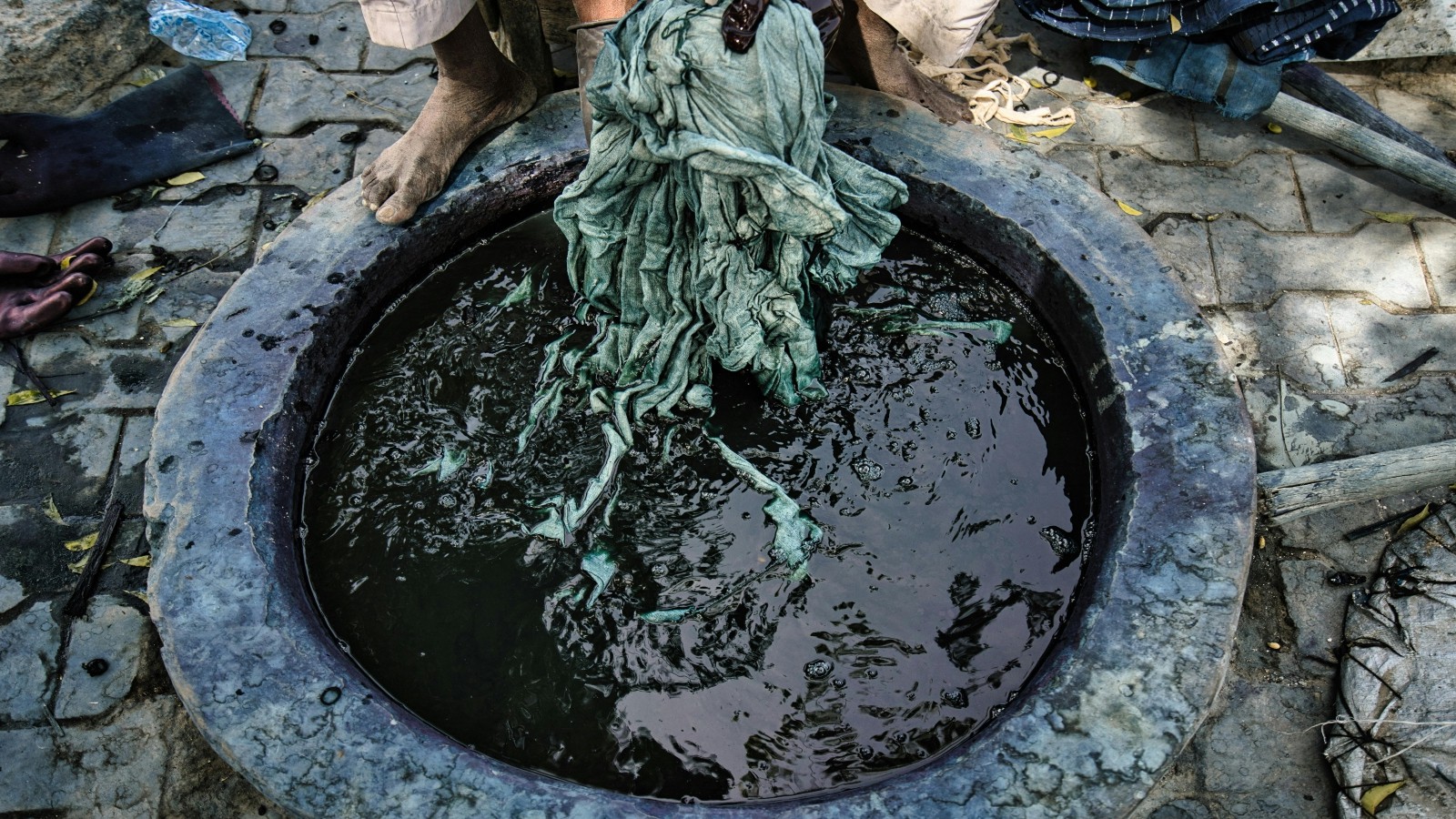
Brightly coloured clothes often come at a hidden cost. The dyes that give fabrics their rich shades often end up in wastewater, flowing from textile units into rivers and soil. Many of these dyes do not break down easily. They persist in the environment, block sunlight in water bodies, and harm living organisms.
Industries already use several methods to deal with dye pollution. The most common approach relies on adsorbent materials such as activated carbon, zeolites, and polymeric resins, which trap dye molecules. While this process effectively removes the dye from water, it does not completely solve the problem. The trapped dye remains intact and is often dumped elsewhere, where it can seep into soil or landfills.
Biological treatments offer another route. Certain bacteria can break down dye molecules, making this a more complete solution. But these systems are slow and often struggle in harsh conditions, especially in wastewater that contains high salt levels.
A research team from the Indian Institute of Technology Bombay, led by Prof. Shobha Shukla, along with collaborators from the National Institute of Oceanography, Goa, set out to address this gap. Their innovative approach imparts dual functionality to an engineered material by integrating dye-capturing capability with a bacterial component that degrades the absorbed dye molecules. This synergistic approach paves the way towards a more sustainable and comprehensive solution to dye pollution. Their study was recently published in the Journal of Materials Chemistry A.
The researchers built a small bio-nano system using graphene oxide nanosheets and a marine bacterial strain known as Bacillus NAG1. This bacterium was isolated from mangrove environments, where microbes are naturally exposed to changing conditions and pollutants.
“These bacteria are more robust in nature, compared to standard laboratory strains and can survive in saline conditions. Marine bacteria tolerate extreme environments like high salinity, high pH and temperature,” says Prof. Shukla.
To capture dye molecules, the researchers used graphene oxide, a thin nanosheet material with a high surface area that disperses well in water and binds efficiently to pollutants. It also provides a surface for bacteria to attach, making it suitable for combining material-based and biological treatments. Although graphene oxide can have antibacterial effects, this depends on its concentration. At controlled levels, it can support bacterial activity while still trapping dyes, making it more effective than materials that only adsorb pollutants.
To find the right balance, the team tested how live marine bacteria responded to different concentrations of graphene oxide, tracking their growth and attachment using standard lab methods and microscopy. They found that at low to moderate concentrations, the bacteria remained active and attached to the nanosheets, while higher concentrations of graphene oxide reduced their activity. The team identified an optimal range of graphene oxide concentration that supported both bacterial growth and dye degradation. “By attaching marine bacteria on graphene oxide nanosheets, we created a system where the material adsorbs the dye and makes it more accessible for bacterial degradation,” explains Dr. Neha Redkar, the first author of the study.
This setup also helps to solve a practical problem. Free-floating bacteria can get washed away in polluted water. Anchoring them onto a surface such as graphene oxide keeps them in place and active.
The researchers tested this system on two commonly used dyes, Azure A and Azure B, known for their stable structure and resistance to breakdown. When treated with the bio-nano system, most of the dye disappeared within about 24 hours, with removal efficiencies close to 95%.
While graphene oxide-bacteria systems have been explored before, this study is among the first to combine a marine bacterial strain like Bacillus NAG1 with graphene oxide nanosheets in a simple, integrated design. Earlier approaches often involve multi-step processes or structured materials such as hydrogels and beads, which can be harder to prepare, costlier, and may limit how easily pollutants reach the bacteria. They also often take longer to work, or may lead to the reduction of graphene oxide into forms that can be toxic to cells.
In contrast with the earlier systems, the one developed in this study achieves rapid and effective dye removal. Each component plays its role: graphene oxide attracts dye molecules to its surface, while the bacteria break them down.
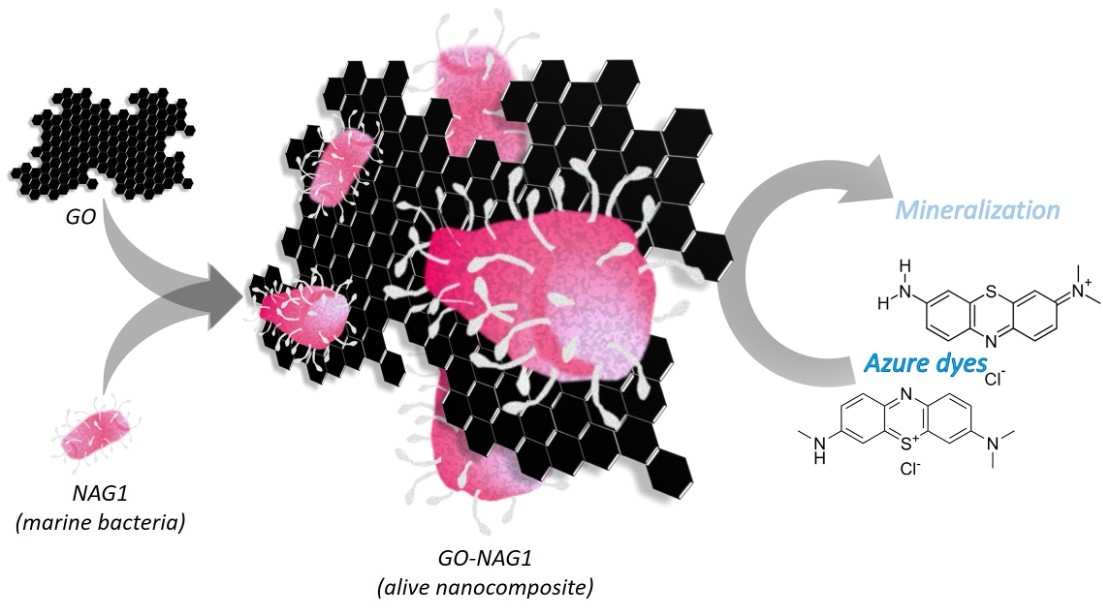
The team also found that the bacteria produced more enzymes in the presence of graphene oxide. These enzymes, such as laccase and peroxidases, are known to break down complex chemical structures found in dyes. Chemical analysis showed that the dyes were converted into smaller compounds that could degrade further.
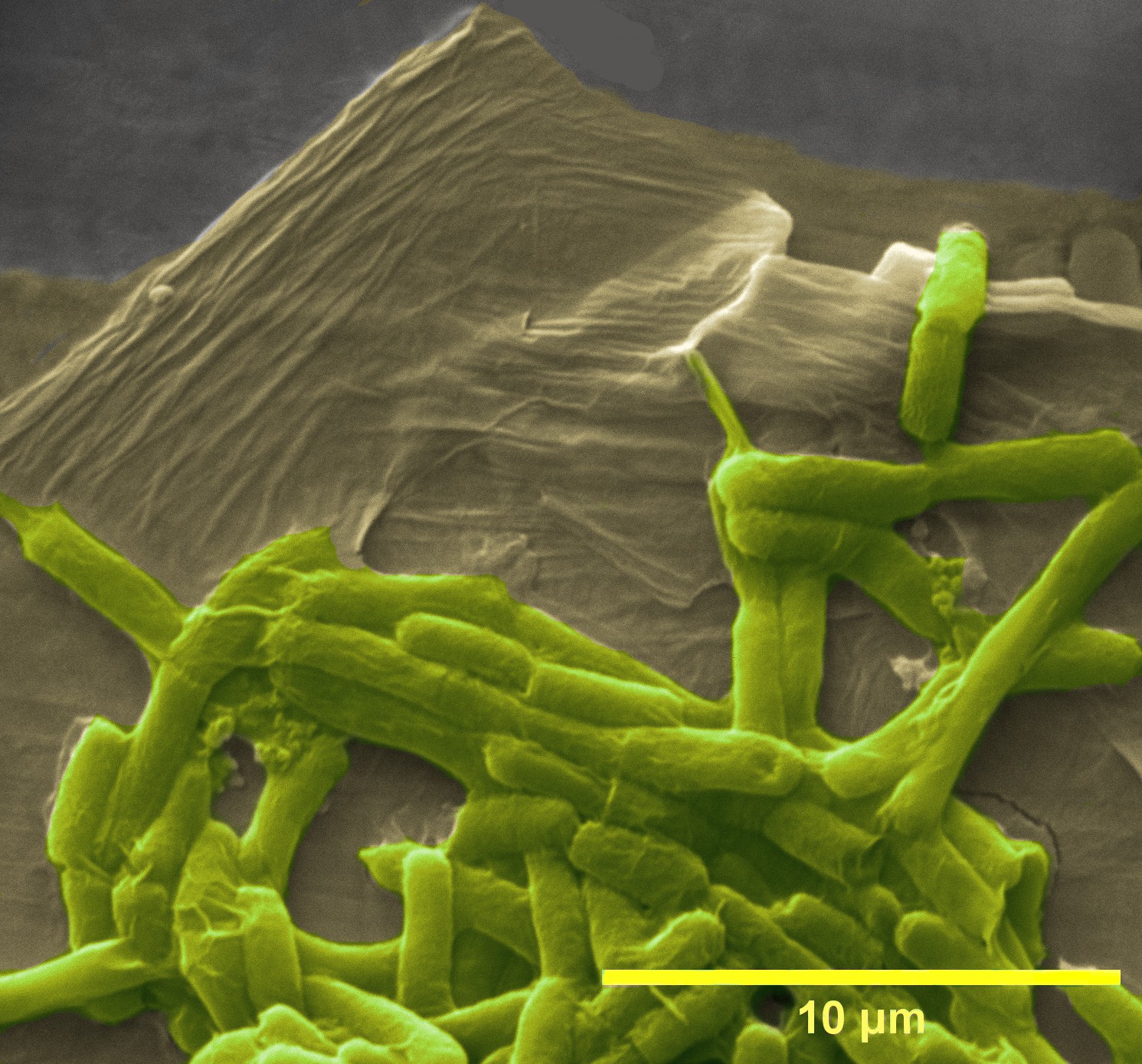
Microscopy images revealed how this worked at a microscopic level. The graphene oxide sheets formed layered structures, with bacteria attached along the surface and within folds. This arrangement brought the dye molecules closer to the bacteria, helping the breakdown process.
“We are not just removing the dye or just absorbing it. We are degrading it down towards its simplest, harmless forms,” says Prof. Shukla.
The researchers believe that their concept has the potential to work in real wastewater plants, though some practical challenges remain “I believe our approach is scalable, but maintaining the system may be slightly expensive compared to existing treatment technologies,” explains Dr. Redkar. Even so, the approach offers something existing methods often lack. Instead of transferring pollutants elsewhere after trapping them, it aims to break them down.
The next step is to design a more practical system. Instead of flat sheets, the researchers are exploring sponge-like materials that can hold more bacteria and handle larger volumes of wastewater.
“We want a kind of one-stop solution. Something that can trap, hold and degrade pollutants in a compact system,” says Prof. Shukla. If successful, such systems could help industries treat wastewater more effectively, without simply shifting the pollution from one place to another.
| Article written by: | Manjeera Gowravaram |
| Image/ Graphics Credit: | Lead image: Adedoyin Aderomola via pexels.com Inline images: Authors of the study |
| Link to Gubbi Labs: | -- |